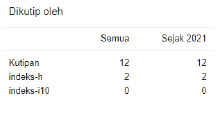
Ethnicity and Recruitment of Personnel in the Delta State Civil Service
 https://doi.org/10.54012/jssh.v1i1.713
 Abstract views: 161
 PDF downloads: 663
Keywords:
Ethnicity, Recruitment Practices, Meritocracy, Civil Service Efficiency, Weber’s Bureaucratic TheoryAbstract
This study investigates the influence of ethnicity on recruitment practices in the Delta State Civil Service, examining how ethnic considerations affect merit-based selection, workforce efficiency, and overall organizational performance. The study employed a cross-sectional research design and was guided by Weber’s Bureaucratic Theory, which emphasizes meritocracy, formal rules, and competence as the foundation of an effective public service. The study assesses the extent to which recruitment processes in Delta State conform to or deviate from these principles. The study population comprised 3,723 civil servants, from which a sample of 397 respondents was selected using a stratified sampling technique to ensure adequate representation across ministries and cadres. Out of the 397 questionnaires distributed, 341 were returned and analyzed. Three hypotheses guided the analysis. Findings from the first hypothesis confirm that ethnicity significantly influences recruitment decisions, often overriding merit and weakening transparency, contrary to Weberian expectations of impartiality and professionalism. The second hypothesis established a strong relationship between ethnicity-based recruitment and worker inefficiency, revealing that individuals appointed through ethnic patronage often lack the required competence, resulting in lower productivity and poor service delivery. This supports Weber’s argument that recruitment based on merit is vital for bureaucratic efficiency. The third hypothesis identified a moderate yet significant relationship between ethnicity and merit, showing that although meritocratic structures exist, ethnic pressures continue to undermine their implementation. The study concludes that ethnicity-based recruitment weakens institutional capacity, reduces efficiency, and hampers long-term development. It recommends, among others, that the Delta State government should strengthen transparent merit-based recruitment systems, enforce anti-discriminatory policies, and promote continuous professional development in line with Weberian principles to build a more accountable and performance-driven civil service in Delta State.
References
Abugu, S. O., & Eno, E. J. (2018). Workforce diversity management in Nigeria public service: Problems and prospects. Global Journal of Human Resource Management, 6(1), 35 - 50.
Adagbabiri, M. M., & Okolie, U. C. (2019). Job Design and Employee Performance in Nigeria Bottling Company Plc, Benin City. Annals of Spiru Haret University Economic Series, 19(3), 65 – 89. https://doi.org/10.26458/1934
Adebayo, A., & Ojo, T. (2019). Ethnicity and public sector employment in Nigeria: Implications for organisational efficiency. Journal of Public Administration and Policy Research, 11(3), 45–58.
Adeola, R. (2017). Merit versus ethnicity in Nigerian civil service recruitment: Challenges and prospects. African Journal of Governance and Development, 6(2), 22–35.
Adeyemi, S., & Akinbode, F. (2018). Ethnicity and recruitment practices in Nigerian public service: Implications for efficiency and fairness. Journal of Public Administration and Policy Research, 10(3), 45–55.
Adeyoriju, R., & Fajebe, F. (2018). Human resources recruitment and selection practices in Nigerian organizations. Interdisciplinary Journal of Education, 1(2), 130 – 138.
Agbodike, F., & Igbokwe-Ibeto, C. (2015). Recruitment policies in the Nigerian Federal Civil Service and their implications on employees' performance. Kuwait chapter of Arabian Journal of Business & Management Review, 5, 34 - 48. https://doi.org/10.12816/0019014.
Babbie, E. (2007). The practice of social research (11th Edition). Belmont: Thomson Learning.
Bello, H., & Yusuf, M. (2017). Meritocracy and public service efficiency in Nigeria: Challenges and prospects. Nigerian Journal of Governance and Development, 6(2), 88–101.
Ejumudo, K. B. O. (2011). Constraints in staff recruitment and selection system of Delta State Civil Service. Unpublished Ph.D Thesis Presented to the Department of Political Science, Delta State University, Abraka, Nigeria.
Erhirhie, B., & Okereka, O. P. (2023). Ethnicityand effectiveness recruitment exercise in Delta State public service. NIU Journal of Social Sciences, 9(4), 177 – 185.
Erlandsson, A. (2023). Gendered ethnic discrimination and the role of recruiter gender. A field experiment. Acta Sociologica. 4, 49 – 56. https://doi.org/10.1177/00016993231201482.
Etinagbedia, G., & Okolie, U.C. (2024). The importance of ethical leadership and employee performance in modern organizations. Pinisi Business Administration Review, 6(1), 17 – 30. https://doi.org/10.26858/pbar.v6i1.59607
McNabb, D. E. (2012). Research methods in public administration and nonprofit management: Qualitative and quantitative approaches (3rd Edition). New Delhi: PHI Learning Private Limited.
Nnamoko, F. D., & Mohd, F. B. K. (2023). Challenges of managing ethnic workforce diversity: A case study in Abuja, Nigeria. International Journal of Research and Innovation in Social Science. https://doi.org/10.47772/ijriss.2023.70811.
Nwani, O. C., & Okolie, U. C. (2022). The role of leadership in workplace diversity management. Tomsk State University Journal of Economics, 57, 192 - 201. https://doi.org/10.17223/19988648/57/13
Obasi. I. N. (2000). Research methodology in political science. Enugu: Academic Publishing Company.
Ogbonna, E., & Ukpere, W. (2015). Recruitment practices and public service performance in Africa: The role of ethnicity and favoritism. African Journal of Business Management, 9(8), 345–356.
Okereka, O. P. (2015). The ecology of recruitment and selection of personnel and the quest for efficiency in the Delta State Civil Service. Global Journal of Political Science and Administration, Vol. 3, 1 - 10.
Okolie, U. C., & Edo, Z. O. (2023). Issues and failure of infrastructure project implementation in Nigeria. Social Sciences, Humanities and Education Journal, 4(3), 580 – 596.
Okolie, U. C., & Okoedion, E. G. (2023). Workplace diversity management and Russia language learning: A study of Russian embassy in Nigeria. Journal of Business Management Education, 8(1), 81 – 96.
Orhero, A. E., & Okolie, U. C. (2023). Workplace diversity and the performance of Coca-Cola Company in Benin City, Edo State, Nigeria. PERSPEKTIF, 12(3), 844 – 859.
Ugwuozo, M. (2011). Managing corporate culture in Nigerian environment. Journal of Social and Policy Research, 5 (1), 123 - 137.
Weber, M. (1947). The theory of social and economic organization. New York, NY: Oxford University Press.
Wright, F., Malone, S., Wong, A., Melkus, G., & Dickson, V. (2022). Addressing challenges in recruiting diverse populations for research. Nursing Research, 71, 218 - 226. https://doi.org/10.1097/NNR.0000000000000577.
Downloads
Published
How to Cite
Issue
Section
License
Copyright (c) 2025 Nathaniel Oromoni, V. E. Efebeh , F. A. Ikenga

This work is licensed under a Creative Commons Attribution-ShareAlike 4.0 International License.